GSR Standard: Understanding Compliance and Industry Standards
The latest Government Statutory Rules (G.S.R.) reflect India’s push toward Electric Vehicles (EVs) and inclusive mobility.
1. G.S.R. 07 (E) dated 2nd January 2026 – Acoustic Vehicle Alerting System-: This notification mandates the use of Acoustic Vehicle Alerting Systems (AVAS) for low-noise vehicles such as electric and hybrid models. AVAS generates audible signals at low speeds to alert pedestrians and cyclists, improving safety in urban and silent-running environments.
2. G.S.R. 416 (E) dated 23rd June 2025 – AIS-169, AIS-178, AIS-183 for Adapted Vehicles -: This gazette notification enforces updated safety and design requirements for adapted vehicles, including those modified for differently-abled users. It ensures that vehicle adaptations comply with modern standards for braking, structural integrity, and occupant protection.
3. G.S.R. 223 (E) dated 9th April 2025 – CMVR Rule 126 for Agricultural & Power Tiller Testing -: This regulation expands Rule 126 of CMVR 1989 to include testing of power tillers and agricultural tractors at SRFMTTI and NRFMTTI. It improves quality control, emissions compliance, and safety evaluation for agricultural machinery used across India.
Devendra Automobile provides expert support in achieving compliance with these advanced automotive safety and electric vehicle standards through end-to-end regulatory assistance. With strong technical understanding and practical approval experience, Devendra Automobile assists manufacturers in design evaluation, testing coordination, documentation preparation, and certification management. Their structured approach helps reduce compliance risks, avoid approval delays, and ensure vehicles meet mandatory safety and performance requirements for successful approval and commercialization.
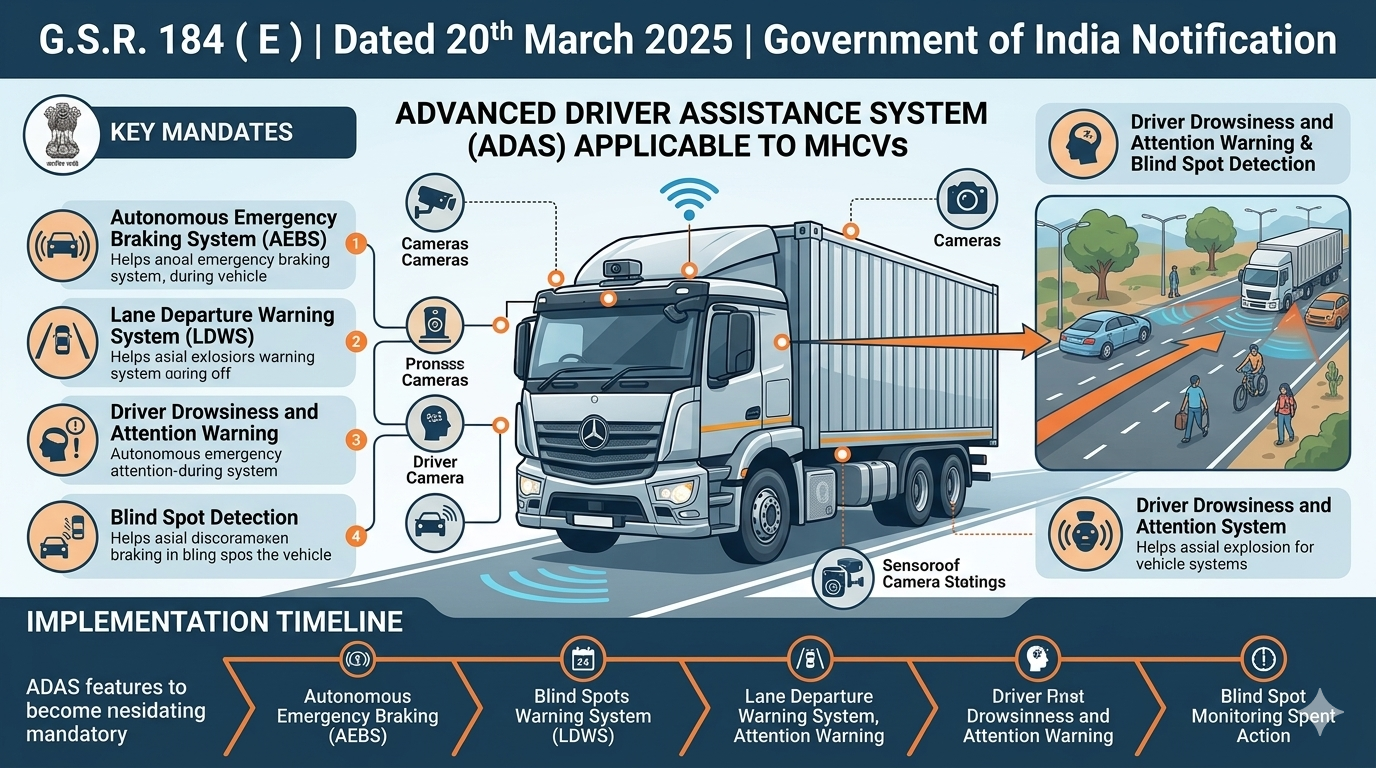
4. G.S.R. 184 (E) dated 20th March 2025 introduces new regulatory requirements related to the implementation of Advanced Driver Assistance Systems (ADAS) for Medium and Heavy Commercial Vehicles (MHCVs). This notification focuses on improving road safety standards by encouraging the integration of advanced safety technologies in commercial vehicles. ADAS features such as collision warning systems, lane departure alerts, and driver monitoring systems help drivers detect potential hazards and respond more effectively while driving. By adopting these safety technologies, the regulation aims to reduce accidents involving heavy vehicles and improve overall traffic safety on highways and city roads.
5. G.S.R. 416 (E) dated 23rd June 2025:- introduces important regulatory provisions related to AIS 169, AIS 178, and AIS 183 standards for adapted vehicles. These standards focus on ensuring safety, accessibility, and proper vehicle modifications for individuals with special mobility requirements. Adapted vehicles are specially designed or modified to accommodate persons with disabilities, and the implementation of these Automotive Industry Standards (AIS) helps ensure that such modifications meet safety and performance guidelines. The regulation aims to create a structured framework for manufacturers and vehicle modifiers to follow approved standards when developing or adapting vehicles.
Get Expert Support for GIS Standard Certification Today
6. G.S.R. 223 (E) dated 9th April 2025:- introduces an important update under Rule 126 of the Central Motor Vehicles Rules (CMVR), 1989, regarding the testing and certification of agricultural machinery. The notification includes provisions for the testing of power tillers at SRFMTTI (Southern Region Farm Machinery Training and Testing Institute) and agricultural tractors at NRFMTTI (Northern Region Farm Machinery Training and Testing Institute). This move aims to strengthen the regulatory framework for agricultural equipment by ensuring that tractors and power tillers meet the required safety, performance, and quality standards before being introduced into the market.
7. G.S.R. 834 (E) dated 11th November 2025:- introduces important regulatory provisions related to the implementation of Anti-lock Braking Systems (ABS) for vehicle categories M2, M3, N1, N2, and N3 in accordance with IS 11852:2019 standards. This notification focuses on improving vehicle braking performance and road safety by ensuring that commercial and passenger vehicles are equipped with advanced braking technology. The ABS system helps prevent wheel lock during sudden braking, allowing drivers to maintain better steering control and reducing the risk of skidding, especially on slippery or uneven road surfaces.
8. GSR 835 dated 11th November 2025:- introduces amendments to the Central Motor Vehicles Rules (CMVR) related to the regulatory requirements for E-Rickshaws and E-Carts. These amendments aim to strengthen safety, performance, and compliance standards for electric three-wheelers used for passenger and goods transportation. As the adoption of electric mobility continues to grow, the updated CMVR provisions focus on ensuring that E-Rickshaws and E-Carts meet defined technical specifications, including vehicle design, battery systems, and operational safety. These regulations help standardize the manufacturing and operation of electric vehicles within the commercial transport sector.
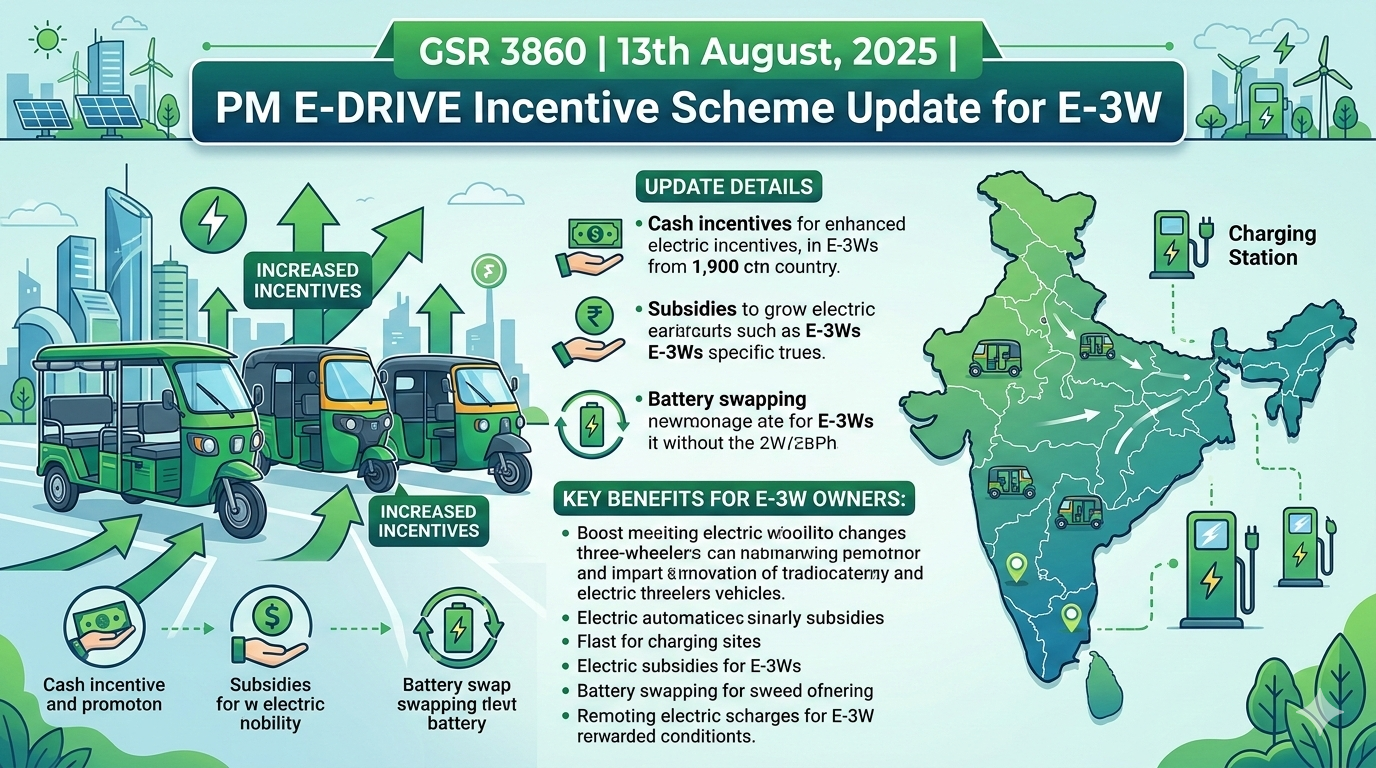
9. GSR 3860 dated 13th August 2025 :- introduces an important update to the PM E-DRIVE Incentive Scheme for Electric Three-Wheelers (E-3W). This notification focuses on promoting the adoption of electric mobility by providing financial incentives and policy support for E-3W vehicles, including electric rickshaws and electric cargo three-wheelers. The updated provisions aim to encourage manufacturers and buyers to adopt electric three-wheelers by improving affordability and supporting the growth of sustainable transportation. Through the PM E-DRIVE scheme, the government continues to strengthen its commitment to reducing carbon emissions and accelerating the transition toward clean mobility solutions.
10. S.O. 3467 dated 22nd July:- introduces updated safety standards for E-Rickshaws and E-Carts, aiming to strengthen regulatory compliance and improve the operational safety of electric three-wheelers. As the use of E-Rickshaws and E-Carts continues to increase across urban and rural transportation networks, the updated guidelines focus on ensuring better vehicle design, stability, and passenger safety. The notification emphasizes adherence to improved safety parameters, technical specifications, and compliance requirements to maintain consistent quality and performance standards for these electric vehicles.
11. G.S.R. 07(E) dated 2nd January 2026:-introduces the inclusion of E-Rickshaws and E-Carts under the L5 vehicle category in the regulatory framework. This amendment aims to formally classify electric three-wheelers within the Central Motor Vehicles Rules, providing clarity on safety, design, and operational standards. By categorizing E-Rickshaws and E-Carts as L5 vehicles, the government ensures that manufacturers and operators follow standardized guidelines for vehicle construction, performance, and roadworthiness, enhancing the safety and reliability of these electric vehicles.